The good ideas chase us.
The ones we build are the ones that keep coming back — still there after we have read around them, understood why they are hard, and set them aside for a while. That is how an idea earns its first line of code.
A digital product company
We build and run our own products, and we take our time choosing them. Once one is worth building we move quickly — and the people using it tell us how to make it better.
Space or tap to jump · again in the air to double jump
The ones we build are the ones that keep coming back — still there after we have read around them, understood why they are hard, and set them aside for a while. That is how an idea earns its first line of code.
Short cycles and small steps, with something real in front of people early. A week with a live version teaches us more than a quarter with a perfect plan.
We have opinions and we stand by them. And the people actually using it keep showing us things we would never have seen from the inside — what they do with it is the best guide we have.
A very powerful one, and still a tool. We use it where it genuinely earns its place, and pick something simpler where that does the job better.
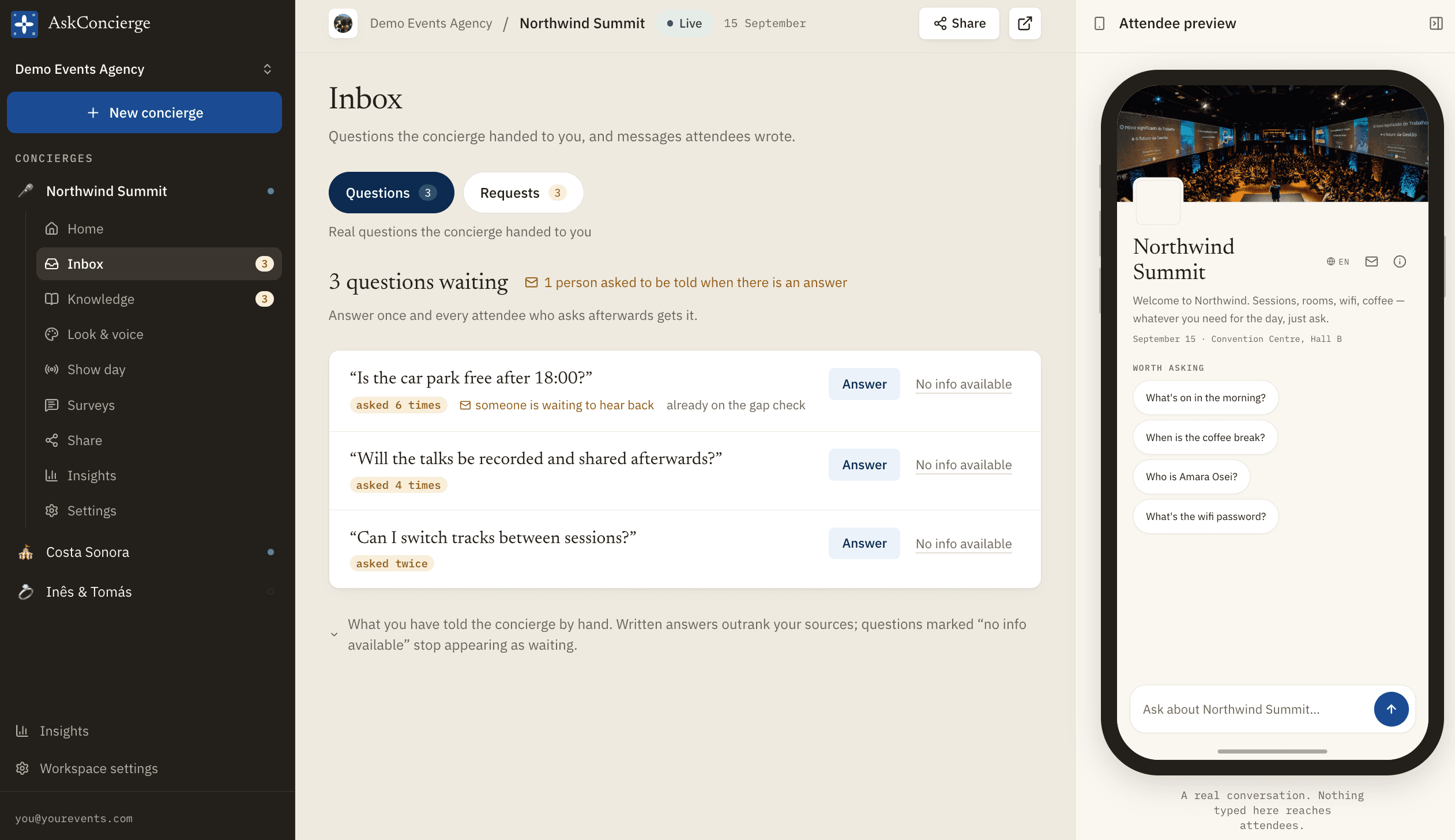
Attendees ask the same practical questions all day. Point it at your programme and share a link: they get answers straight away, and you end the day knowing exactly what they came looking for.
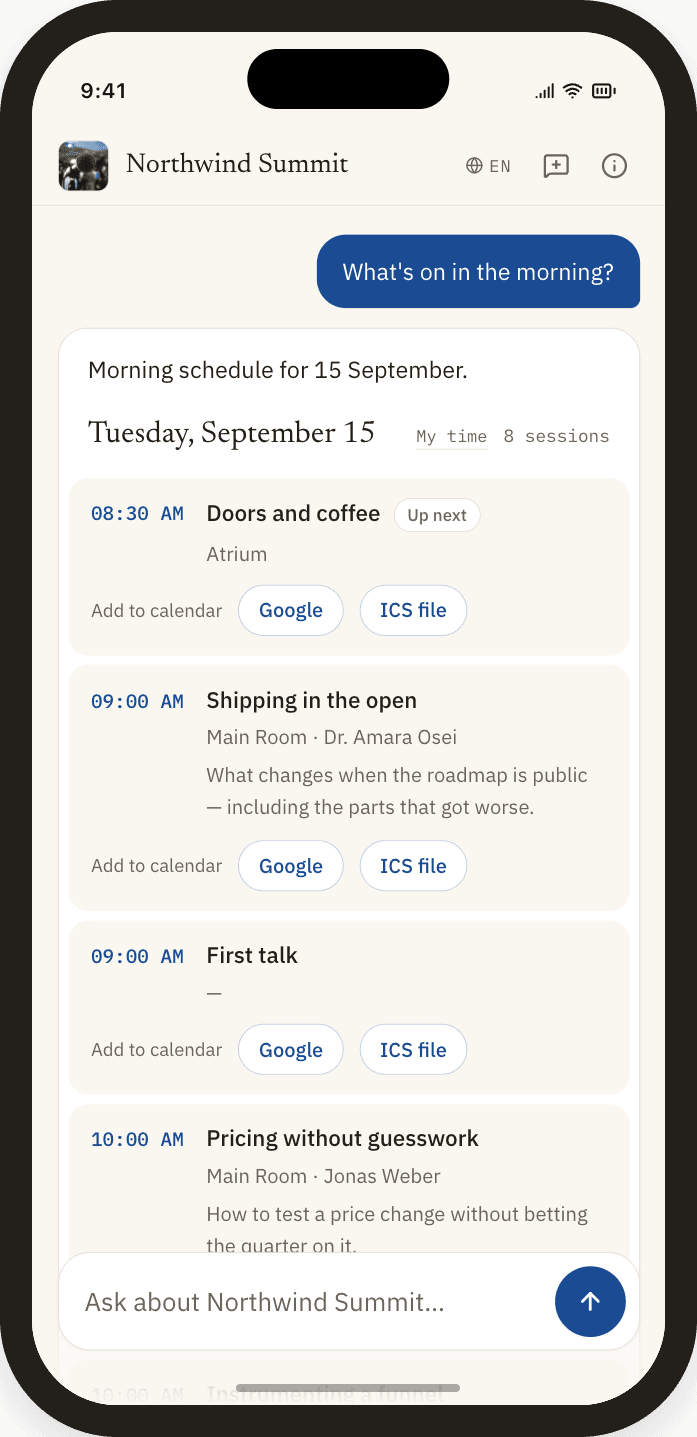
Every answer traces back to something you wrote. When a question falls outside that, it says so and passes it along to you.
What people asked, in which language, and the topics worth writing up before the next time.
Gaps, queues, and the few decisions that are better made by a person. Software that hands the work back in good order.
The same three run through everything we build. Most started as a tool we made to get our own work done — when one proves itself, it grows into a product in its own right.
The problem first. The tools after.
Founder-led and small on purpose. The same four steps on everything we build, which is what keeps the portfolio short and the distance between us and the people using it small.
hello@pulsierlabs.com →We write down the single question the product answers, and sketch it on the back of a napkin. If it takes more than a sentence to say, or more than a doodle to draw, it is not clear enough yet.
A working link you can put in front of people, already set up to show us how it gets used.
Every run leaves a list: the questions it could not cover yet, the ones that came up twice, the things worth adding. That list sets the next two weeks, ahead of whatever we had planned at the start.
A tool that proves itself grows into a product of its own. The ones that do not usually teach us something worth carrying into the next one — we write down what, and go again.